A Visual Guide To Publishing*

*Traditional publishing, that is.

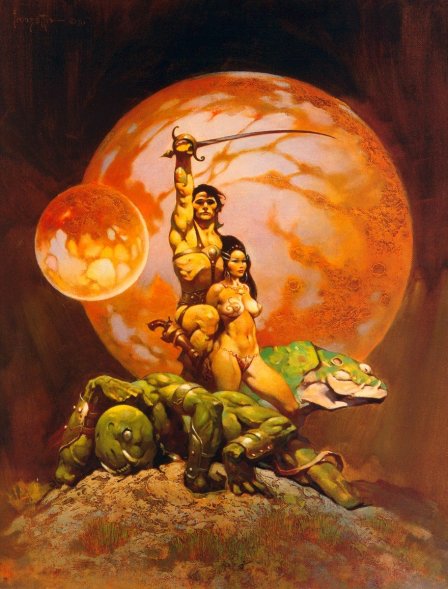
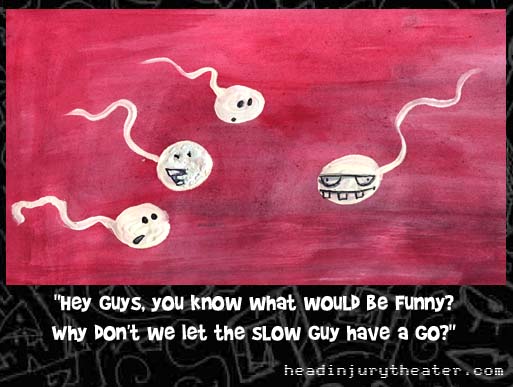
Author Nathan Bransford has posted a clever visual timeline of a writer’s experience in writing and publishing a book. It’s funny and accurate, though he left off the parts at the end where you don’t get any promotion for your book and it probably falls out of print before your next one is ready for release. Or the part where they don’t pick up your next one because they blew their budget for this quarter on Snooki’s new magnum opus.

Also, it’s amazing how many of these steps disappear if you publish as an indie, and how much more quickly your book is available even if you do the necessary things you ought to do, like making sure it’s properly edited…

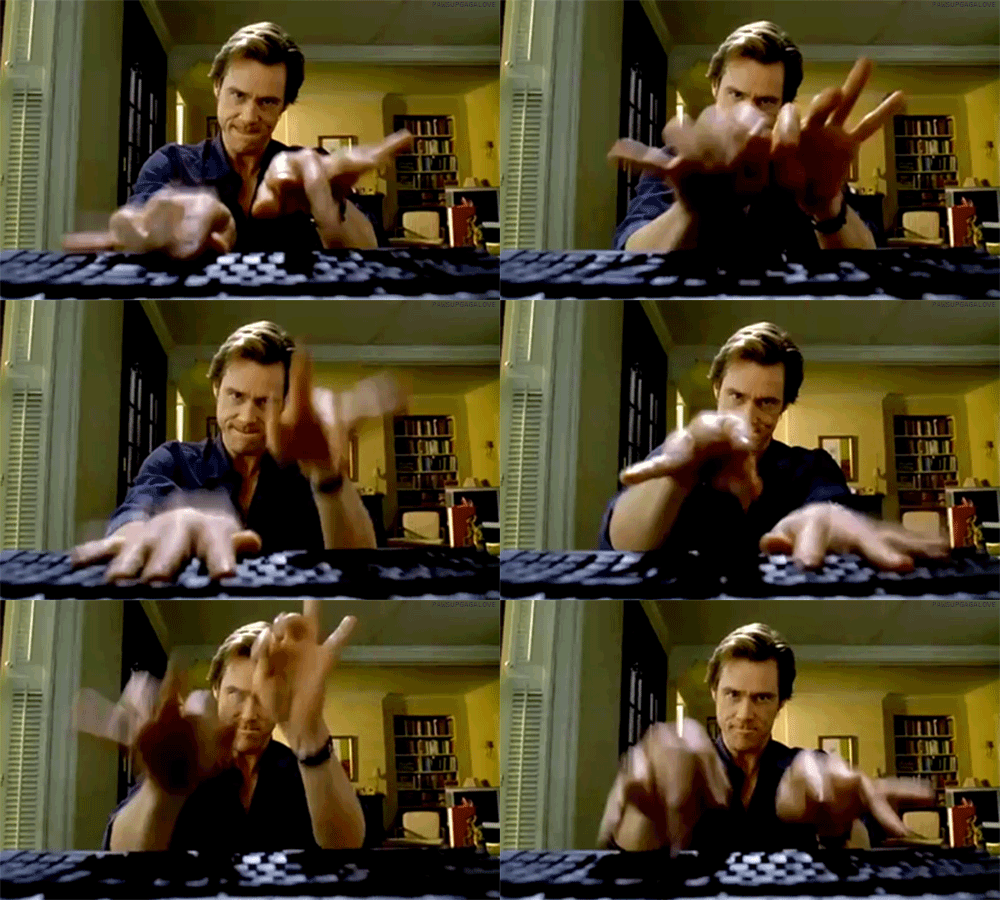
The Publishing Process in GIF Form

Silhouette (A Poem)

I don’t write much poetry, and when I do, I do it sort of like I write my blog posts, off the cuff with little polishing. Years back, I took a poetry writing course in college, taught by the man who would go on to be Georgia’s Poet Laureate, David Bottoms, and one day, while suffering through some terrible piece by one of my classmates, I flipped my copy of the poem over and spontaneously wrote a poem on its back.

Later, I workshopped the poem, and Bottoms praised it highly. It was always one of my favorite poems I’d written, but at some point I lost any copies and didn’t feel I could recapture it by trying to write it anew. Recently, however, I dug out my folder of other people’s poems from that class (to share some particularly hilariously bad ones with a friend), and was thrilled to find the original, scrawled draft on the back of that other guy’s poem.

Here it is. I hope you like it.

The silhouette and
Me.

I must know.
Is it He?

I step forward
hearing my ankles creak
like old wood.
I feel the bones in my feet.
The silhouette, through watching,
glides toward me as well.

We approach each other through the mist
in this, my home,
my cold, damp, musty tomb. 
There is a jump in my heart
as I hear the clank of chain,
as I dimly see the blade
glorious at his side.

Then I see.
The silhouette, like a thousand times before,
is me.
In my own bloody mirror.
I, a master of illusion,
have deluded myself once again.

Above, beyond the frozen bars of my tomb,
my captor shrieks shrill laughter.
She knew, all along,
that it was not He.

And I, old fool,
broken stick of a wizard,
sink to my knees and cry. 

Tim On The Radio: Talking With PULPED! About Doc Wilde, Indie Publishing, & Kickstarter…

Last week, I was interviewed by Pro Se publisher Tommy Hancock for the Pulped! podcast (which, as you might imagine, is all about pulp fiction). We discussed the relaunch of the Doc Wilde series, the Kickstarter I’m currently running to help with that (which ends April 28th), self publishing vs. traditional publishing, and other pulpy things. While my radio face is only slightly better than my internet face, I think the interview came out pretty well, and you can hear it at:

Tim Byrd Gets Pulped!

Internet Killed The Literary Stars (Or Did It?)

There’s a lot of grumpiness these days about books, book selling, book publishing, the “proper” format of books, Amazon’s assault on books by publishing and selling lots and lots of books, and how nobody reads books no more.

Did you know that if you’re reading my blog on a screen of some type, it’s not literature (and you’re probably a subliterate ignoramus who DOES. NOT. LOVE. BOOKS.), but if I print it out on paper it is suddenly transformed and worthwhile? Apparently that’s the case.

Yep. Lots going on. I’ve written about it a bit before (like when I posted about the “Ebook Apocalypse“), and I’m active on the battlefield as an author who used to be with one of the Big 6 publishers but has now gone entirely independent (see my “Astonishing Adventures of Doc Wilde” Kickstarter project, live until April 28th, 2012, please take a look and help a strugglin’ wordsmith out).

Are things really all that bad? Or are they just different? Could they even be better?

I saw some reports recently that indicate that the doom and gloom may be uncalled for. Continue reading

John Cleese On Creativity

John Cleese on creativity. Do I have to say more?

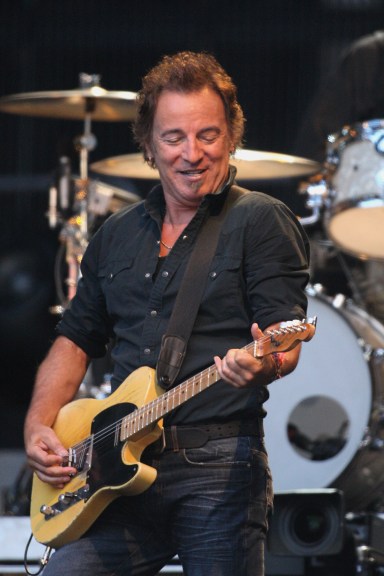
As Promised, Springsteen…

In my post about the Springsteen show last Sunday (on my birthday), I said I was waiting for some decent videos to appear online, and I’d share some when they did. Well, I just dug around a bit in some of the stuff that’s been posted, and nothing I’ve seen so far has really captured the show well enough. I had much better luck the last time I saw him, when some of the smartphone footage posted was good enough to share (here and here).

I did find some good footage from the SXSW show three days earlier, and in order to give you a better sense of what the concerts are like, I’m going to share those, as well as Bruce’s live debut of the song “Wrecking Ball” at Giant’s Stadium, which was about to be torn down (and which is the subject of the song). I’d like to show actual performances from the show I saw, but whatcha gonna do?

After the songs, though, check out the keynote speech Bruce gave at SXSW. It’s brilliant. Funny, engaging, informative, musical, and awesome. If you haven’t seen it, you really, really should. Especially if you’re a musician. Or a writer.

The Heart of Storytelling

Andrew Stanton, the Academy Award-winning writer/director of Wall-E and Finding Nemo (and director of the new epic science fantasy adventure John Carter, which is apparently pretty damned wonderful) gave a great TED talk last month on the heart and soul of telling stories. It’s very entertaining and insightful and particularly valuable for the writers among us…

A New Definition of Writing Success

More on the “ebook apocalypse” front, and the self-publishing revolution, this time from writer James Scott Bell.

Here’s a bit (link at the bottom):

We all know the traditional model is shrinking. Advances on new contracts are at historic lows. With physical shelf-space disappearing, print revenues are down. While digital income is up for the publishers, the slice of that pie given to authors remains stagnated at 25% of net (or roughly 17.5% of retail). And new writers are finding publishers increasingly risk averse regarding debut authors.

Still, many writers remain focused on [getting published]. It represents some sort of “validation” even though it could very well mean less income…and fewer readers.

But now a new model of writing success has appeared. Writers, for the first time since the troubadour era (when you could go out on your own and make up stories in song and take in some coin), have it within their power to get their writing out there without a middleman (the fancy term is “disintermediation”).

And further, unlike self-published authors of yore, they actually have a chance to make real dough. Every day we are hearing more accounts of self-published writers who are earning significant income as independents.

Yet income alone is not the main draw of this new model, which looks like this:

Freedom is the invaluable commodity here. To be able to write what you truly want to write, and know that you can get it into the marketplace, is tremendously liberating. It is, in fact, the engine of happiness for a writer. It’s exhilarating to write for yourself, see what you’ve written, fix it, and keep on writing—and be assured that it will have a place in the stream of commerce, for as long as you live.

From The Kill Zone: A New Definition of Writing Success

Book Biz

Some supplementary info for anyone who was interested in my “Ebook Apocalypse” post…

  • Since 2002, about 500 independent bookstores have gone out of business, nearly 20% of them.
  • Independent bookstores currently account for less than 10% of book sales.
  • When Borders folded they closed nearly 650 stores.
  • There are around 700 Barnes & Noble stores, all drastically reducing the number of  books they actually stock.
  • Barnes & Noble is projecting huge losses in revenue for 2012.
  • Amazon holds 75% of the market for printed books online.
  • Roughly 90% of all ebook sales go through Amazon (60%) and Barnes & Noble (30%).
  • Ebook sales on Amazon outnumber printed book sales by roughly 50% and the ratio is growing sharper all the time.
  • According to Publishers Weekly, publishing insiders predict that within five years  ebooks will account for half of all book sales.

Clearly there’s a lot of change going on, and as I wrote earlier, I think it’s good for readers, writers, and independent booksellers (who have a better chance of holding their own in local markets with the crumbling of the big chains). The changes may be more dire for big publishing concerns, however, as more writers realize they can make more money and better handle their own careers by publishing themselves and as book prices fall, bringing less money in to pay for fancy Manhattan office space. Their edge as necessary distributors gets slimmer with each drop in physical stock made by hundreds of  Barnes & Nobles stores, every bookshop that closes, and each ebook that sells.

Writers need to seriously consider self-publishing, focusing mainly on the digital market, with hard copy books as an additional option they make available. And, at least for the foreseeable future, they’re going to reach the vast majority of the available market by dealing with Amazon and B&N, though there is much to gain by working with independent bookstores on a personal level.

Jon Mertz: “Ebooks ARE a Game Changer”

Even as I was posting my post about the “ebook apocalypse”  just now, author Jon Mertz posted his own, about his experiences self-publishing versus his experiences publishing with big publishing companies. Here’s a bit:

I’ve been writing since 1994; I’ve been a traditionally published author since 2002. In the ten years I tried to play the game by New York’s rules, I’ve seen so much ridiculousness, it amazes me the publishing industry has lasted as long as it has. Midlist writers (that is to say those who are not gifted with million-dollar advances and groomed for the supposed bestseller lists) are treated like indentured servants: crummy advances that New York insists are “livable,” crappy royalty rates, contract clauses that are meant to provide steady income for the publisher not the writer, and an accounting system woefully behind-the-times and deliberately complicated so as to render auditing it both costly and intimidating for the average writer.In the year since I’ve been publishing as an indie, I’ve made more money than at any other point in my writing career. I’ve sold more books than at any other point in my writing career (over 20,000 copies of my Lawson adventures JUST on the Amazon US marketplace). And I’ve been able to engage and meet more fans than at any other point in my writing career. And I’m not even as succesful as other indie ebook authors – some of them are making thousands of dollars every single DAY.

Traditional publishing loves to claim that they do a ton of stuff for writers – hence the low pay and royalty rates.

It’s BS.

He breaks things down in good detail, and if you’re interested in these matters, you should check it out.

Ebooks ARE A Game Changer

On Track 2.0

It’s late and I should be in bed. So what better time to update the couple of people out there who’re interested in what’s been going on with me.

Previously On Under An Outlaw Moon

Tim struggled with deep dark depression. Tim underwent ECT, electroconvulsive therapy, aka electroshock treatments. It was pretty cool, and helped a lot.

Tim started a plan to get his life in order, calling it “On Track.” Among other things, he was writing every day, and exercising regularly, and he posted his progress online so people could see if he was doing what he was supposed to. This went really well for a while. Then, it didn’t.

Depression returned. Inertia set in. Tim floundered…

So, what’s happened since then? Continue reading

Great Sex

The gifted and award-winning novelist Nicola Griffith posted an interesting blog entry about a year ago on the topic of how sex is depicted in fiction. It’s very worth reading. Here’s a bit:

A few years ago I was on a panel with two or three other writers and the talk turned to sex in literature. It turned out everyone on the panel (except me) thought all fictional depictions of people having good sex were ridiculous because sex was never, ever super-awesome and mind blowing. No, they said, sex was comical and self-conscious; sex was fumbling and clumsy; sex was embarrassing. Sex, everyone (except me) agreed, never went right the first time, so why did writers insist on writing as though it did?

I didn’t say much on that panel because I was shocked by the notion that so many people thought and felt this way. I’m older now. I’ve heard this supposition many times. I’m tired of it.

In my experience, sex really is super-awesome and mind blowing. It really is astonishing, transporting, and ecstatic. It really is the closest thing on this earth that we’ll come to swimming in a tide of light and magic. If it’s not that way for you, maybe you’re doing it wrong.

I have to say, my experience reflects Nicola’s; the worst sex I ever had was still fantastic.  But I understand not everyone is so fortunate, and some just aren’t that interested.

Hop over and check out her piece, and read through the comments. There’s some interesting discussion.

“Our Body” (A Poem) [NSFW]

I hear your heartbeat in my heart
Pushing and pulling and warming my blood.
I feel your breath in my lungs
Filling, gasping me with life.
I taste your mouth in my mouth
Teeth nibbling, tongue slippery-ing me to joy.

Your body.
My body.
Our body.

I feel skin memory of your lips on me
Sucking me deep
Throat deep
Drinking my seed to your belly.

Your sea brine cream taste won’t leave my tongue.

I am cumulative countless nights deep in your center
Throbbing our heartbeat
Breath-gasping our hot shared air
Mouths mouthing, sliding wet wild
Screaming pounding clawing our voice
Runneling our sweat
Spewing sticky salt our sperm
My sperm. Concentrated me.
Into you.

I never want(ed) to lose our body. Our love.

Getting On Track (Help Wanted!)

On Track...

It’s been an interesting week. Largely in that “Chinese curse: may you live in interesting times” sorta way, but interesting.

And this post has been a pain in the ass. The main idea is to talk about things I’ve done this week to get my life back on track, and the plans I have going forward, and also to ask for some help.

But I’ve started several times, each time digressing as I tried to establish context and discuss what got me to this point, until the post becomes more  a rehash of recent history than a plan of action. If you need such a rehash, I’ve covered most of that ground here already and you can easily catch up. In the notes below, I will briefly cover some pertinent details.

I don’t want to make the mistake I’ve made at times in the past and cook up a huge plan of action that is too much to take on, only to inevitably (and quickly) falter. So I’ll focus on certain areas, and commit to a few definite tasks in those areas, allowing for the plan to grow more complex over time as appropriate.

And, as I said, I’m asking for help. I want friends to help me stay on track by holding me accountable. If you’re interested, I’m looking into ways to post my progress day to day (probably on Facebook) so you’ll know if I’m doing what I’m supposed to be doing, and you can alternately cheer me or badger me. I think it’ll help me a lot. As I figure the tracking system out, I’ll post more info.

Now, the foundation… Continue reading

Free, Easy Ways You Can Help Authors (Please Do These Things!)

Writing has always been a questionable way to make a living.

Yeah, occasionally one of us gets lucky and makes millions, but you may as well plan around winning the lottery. It’s not even a matter of talent…while the bestseller lists are often ruled by writers whose output is an insult to paper and ink, ungodly talents struggle to pay the rent and have to work other jobs to support their families.

But you, as a reader, have the power to help writers you like. Your most basic use of this power, of course, is simply spending money on their work, which is a sacred act. You can take that further by buying additional copies as gifts for others. You can even make a point of actually buying books new, rather than nabbing used copies or reading them at the library.

(Neither of which, I have to tell you, I really have much issue with. As a writer, I write to be read, so the more people reading my work, wherever they get it, the happier I am, on a certain overarching level. And it’s true that someone who reads one of your books for free or cheap may like it so much that they’ll buy your next one fresh off the shelf, where the sale does you the most good. All the same, it’s indisputable that succeeding as a writer is tough, and as a reader your decision to buy new is a powerful act and can make all the difference. I want most of all to be read…but the more sales I get, the better able I am to stay in print and publish even more stuff and make a living at all.)

So yeah, buying is very important. But it’s not all you can do to help struggling scribes, and there are easy things you can do that don’t even cost you anything.

Back in April, author G.P. Ching (who apparently kicks patootie at Guitar Hero) blogged about this very topic, and did such a good job, I don’t think I can improve on it. Her full post is here. In it she offers five ways readers can help writers “that cost absolutely nothing but go a long way toward helping to foster their potential.”

As a struggling mid-lister, I assure you that if you do these things not only will they help, they will be enormously appreciated.

Here are G.P.’s suggestions on free ways to help writers:

5.  Forward their press 
Whether it is a tweet, post, or status message, someone who follows you might be interested. Retweeting or sharing a post only takes a second but could mean connecting a potential reader with an author they’ll love.
4. Tell a friend
If you like someone’s work, there’s no better way than word of mouth to promote their cause. Even if you haven’t read the specific book yet, your comment can inform someone of the book’s availability.  And, of course, if you have read the book, let others know you liked it.  Indie authors don’t have large publicity budgets and rely on personal connections more than anything else for promotion.
3.  Tag and “like” their book on the bookseller’s site
At the bottom of a book’s page on Amazon, there are check boxes to tag a book.  When you check one, it strengthens the association between the book and that category. So, when someone else searches on the category, books with more tags appear higher in the search results.  This increases exposure for the work.
When you “like” a book on Amazon or Barnes and Noble, it adds a message on your Facebook newsfeed and is good promotion for the title.
2.  Add the author’s book to your To-Be-Read pile on Goodreads
All of your Goodreads followers get a glimpse of the cover and can see that you added it. Plus, it increases the number of people associated with the book which can garner interest in the title.
1.  Write a review
Often if your intention is to write a review, an author will provide you with a free copy of the book.  Whether on a blog or on a bookseller’s site, reviews help authors sell more books and are greatly appreciated.
All great suggestions.
More Thinking About Writing (Regarding Tools and Positioning)

Recently I’ve blogged about my attempts to optimize my approach to writing day to day, to hopefully become more productive and prolific. A huge part of that, by necessity, is that I have to deal with my depression; if I can’t, I might as well throw in the towel.

This week, I start a course of ECT (electroconvulsive therapy), which will hopefully give me the edge in that fight. I’m assuming it will, so I’m working on setting the stage for the writing I plan once it’s over.

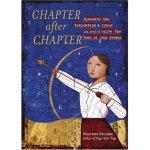
Kate gave me a book about writing for my birthday, Chapter By Chapter by Heather Sellers. Generally I find books about writing to be a waste of time for a writer; most of them say essentially the same things, and once you’ve read one, you’ve pretty much read the rest. If you’re trying to be a writer, your time is better spent writing than reading about writing. Till now, I’ve recommended only two books to writers looking for advice, The War of Art by Steven Pressfield and On Writing by Stephen King.

Chapter By Chapter is now on that list, and not just because it came to me via hot redhead. Kate chose well; Sellers has some fresh perspectives on the work, and her book has been useful to me as I try to figure these things out.

One chapter proved pertinent to this post, the one about “positioning.” Sellers defines positioning as preparing to do the work, mentally and physically, in advance, so that when it’s time to get to work you can just sit down and write. Part of this is making a routine of connecting with your project every evening, thinking about the next day’s writing, staying involved. The other part of it is making sure you’re physically set up in advance so you don’t have to waste time gathering materials and setting up when you sit down to write again. Continue reading

Looking For Advice: Writing On The Ipad

I’m working on changing my work habits as a writer, and part of that is changing tools. Over the years I’ve progressed from fountain pen and legal pad to manual typewriter to desktop PC to portable pre-laptop to laptop to notebook to netbook…

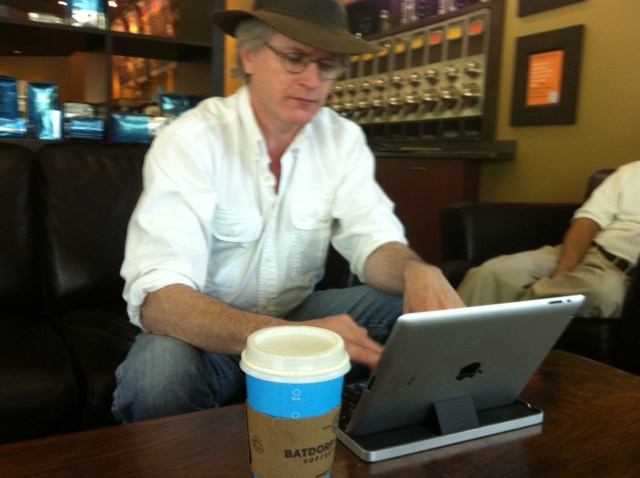
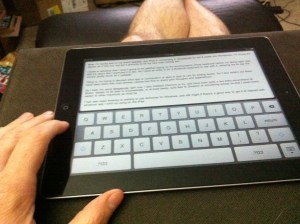
Now, I’m typing this on my brand spankin’ new iPad 2, composing in Simplenote for cut & paste into WordPress. I’m loving the device as a new toy, but got it primarily to be my new main writing tool.

I knew in advance that I wasn’t going to be satisfied typing on the touchscreen’s virtual keyboard (which I’m doing right now, and it’s about like I expected it to be). So I have an order in for a Bluetooth keyboard to use with it, allowing me to use the combo pretty much as a netbook.

Thing is, I’m trying to decide what app or combination of apps is best to use for writing books. So if any writers out there have been down this road already, please feel free to share your thoughts and experiences.

As I said, I’m using Simplenote right now. I also installed Plaintext to try, and have seen quite a few folks recommend IA Writer. Ideally I’d be able to automatically, or at least easily, sync files to Dropbox or something similar so that I could freely switch to other machines as need be. In that vein, I’m curious about DocsToGo as well.

I had also been thinking of starting to use Scrivener for Windows, and still might if there’s a good way to get it to interact with whatever app I wind up using on the iPad.

Again, if you have any experience with this stuff, please share.

The Future of Publishing

This video, from DK Publishing, is genius.

It’s essential to watch the whole thing.

Malaprop 3: The Ironing

(Read Malaprop 1Read Malaprop 2…)

The time feels right for another installment of my Malaprop series, in which I share some delightful literature I’ve snipped from hither and thither on the net…

Can you spot all the errors? Continue reading

Malaprop 2: The Reckoning

NO! NO! PLEASE...PLEASE WRITE CORRECTLY!!!

Go to  Malaprop 1.

Last week, I shared some of my collection of malaprops, little bits of communications gone awry. I’ve been gathering this material for a while and am sharing it in doses so as not to fry too many of your brain cells all at once.

Time for some more.

One note: I had someone call me out on the tone of the first post, and upon reflection I overplayed the whole “idiot” thing. Some of these errors are from idiots, I’m sure, but many of them are not. They’re just mistakes in language perfectly intelligent folks have picked up without realizing. My rhetoric was meant in fun more than it was meant to antagonize or belittle.

Except when it comes to the real idiots. Screw them.

Now on with the show… Continue reading